
 EN
EN



Whether you are navigating a packed subway car during rush hour or sitting through a long-haul flight, daily travel and commuting expose people to unique forms of pressure and mental fatigue. The need for portable, discreet, and effective stress relief products has grown significantly as modern professionals spend more hours in transit than ever before. Finding the right tools to manage anxiety on the go is no longer a luxury — it is a practical necessity for maintaining focus, mood, and overall wellbeing throughout the day.
Not all stress relief products are created equal when it comes to portability and convenience. Some are too bulky for a commuter bag, others require power sources or quiet environments that simply do not exist in a crowded train station. This article breaks down the categories and characteristics of stress relief products that are genuinely well-suited for travel and daily commuting, helping you make smarter decisions about what to carry with you every day.
Why Portability Is the Most Critical Factor for Travel Stress Relief
The Constraints of On-the-Go Use
When you are commuting or traveling, your environment is unpredictable and your available space is extremely limited. Stress relief products that work beautifully at home — such as large massage chairs, essential oil diffusers, or desktop sand gardens — become completely impractical the moment you step outside. The commuter's toolkit demands items that fit inside a pocket, a small pouch, or clip directly onto a bag.
Weight is another critical consideration. Travelers are already managing luggage, laptops, and daily essentials. Adding heavy or fragile stress relief products to that equation creates more burden than relief. Lightweight materials such as soft polyurethane foam, flexible silicone, and compact woven textiles are ideal because they add minimal weight while delivering real tactile or sensory benefit.
The best travel-friendly stress relief products also require no setup and no cleanup. You should be able to use them instantly in a subway seat or waiting lounge and put them away just as quickly. That instant accessibility is what makes a product truly suitable for high-frequency daily use rather than occasional home relaxation.
Discretion and Social Appropriateness
Another dimension that is often overlooked when evaluating stress relief products for commuting is social discretion. Using a product in a public space means it should not draw unwanted attention, make noise, or require unusual body movements that might feel awkward around other commuters. Products that operate silently and unobtrusively allow users to manage stress without disrupting or attracting the gaze of those around them.
Tactile stress relief products, for example, are inherently discreet. Squeezing a soft foam object, pressing on a silicone pad, or rotating a small handheld device can all be done while maintaining a completely normal outward appearance. This quality of invisibility — where the act of stress management blends seamlessly into background behavior — is a defining characteristic of the most effective commuter-focused stress relief products.
Categories of Stress Relief Products That Work Well in Transit
Tactile and Squeeze-Based Products
Among all categories of stress relief products, tactile squeeze items are arguably the most travel-compatible. These include squishy foam balls, anti-stress putty, silicone grip rings, and textured sensory tools. The physical act of squeezing activates the body's relaxation response by redirecting nervous energy into a controlled, repetitive hand motion that calms the nervous system over time.
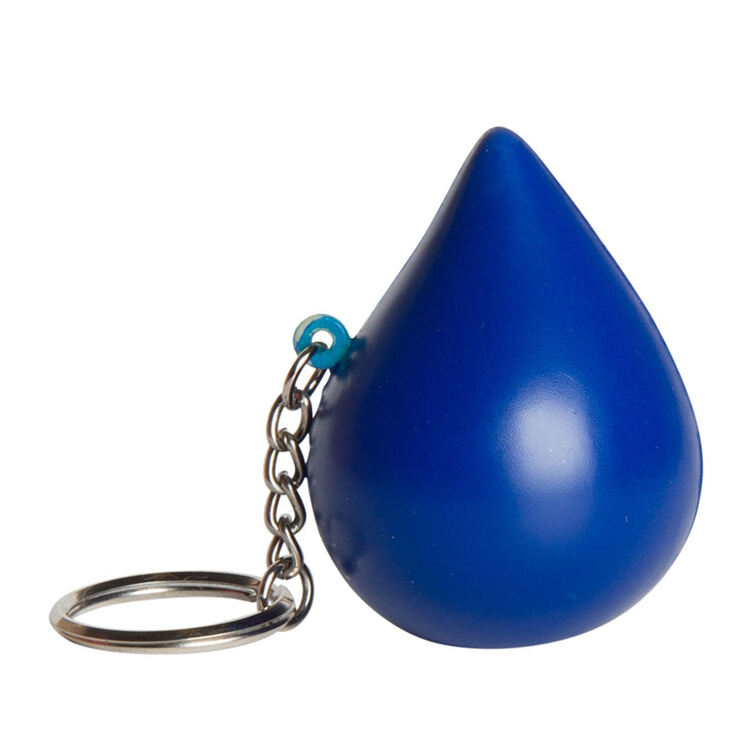
One standout example within this category is the squishy keychain design — a soft, water-drop-shaped foam ball attached to a key ring. This format is particularly clever for commuters because it transforms an everyday carry item into a functional stress relief product. There is no separate item to remember or pack; it simply lives on your keys and is available any time you reach into your pocket or bag.
Polyurethane foam is the preferred material for tactile stress relief products intended for regular use. It is lightweight, resilient, non-toxic, and comfortable against the skin even during extended squeezing sessions. The material's memory-foam quality — where it slowly returns to its original shape after compression — provides a satisfying and repeatable tactile loop that is genuinely effective at reducing momentary anxiety spikes.
Wearable and Jewelry-Style Stress Relief Options
Wearable stress relief products have carved out a strong niche for commuters who prefer to keep their hands free most of the time. Magnetic bracelets, anxiety rings with spinning bands, and textured wristbands fall into this category. These items integrate seamlessly into everyday attire and require no conscious effort to carry because they are always on the body.
The fidget-ring concept is a good example — a ring with an outer band that spins freely around a fixed inner band. Wearing and spinning it during a stressful commute requires no awkward movement and nothing to hold. Stress relief products in wearable form also serve as subtle reminders to practice mindfulness, as putting them on in the morning can signal the beginning of a self-care routine even before the workday begins.
However, wearable stress relief products have a trade-off: they tend to offer less intense sensory stimulation than squeeze-based options. For people who need a stronger tactile outlet to manage higher anxiety levels, wearables may function better as a complement to other portable tools rather than as the sole solution.
Breathing and Mindfulness Aids
Stress relief products in the breathing and mindfulness category include pocket-sized breathing trainers, guided breathing cards, and small scented inhalers. These products work through a different mechanism — instead of engaging the hands, they engage the respiratory system or cognitive attention, both of which are powerful pathways for reducing cortisol and calming the autonomic nervous system.
Pocket breathing trainers — small cylindrical tools that provide gentle resistance during exhalation — are entirely silent, require no power, and are small enough to fit in a shirt pocket. Using one during a congested commute encourages slow, measured breathing that counteracts the shallow chest-breathing pattern that stress tends to produce. These stress relief products are especially valuable for individuals who experience commute-triggered anxiety or panic responses.
Aromatherapy inhalers represent another highly portable format. These small pen-like devices contain essential oil blends absorbed into a cotton wick and can be used discreetly for a few seconds at a time. While the category does overlap with personal wellness accessories, those designed specifically as stress relief products often include blends formulated for focus or calming rather than general fragrance purposes.
Key Qualities to Look for When Selecting Commute-Ready Stress Relief Products
Durability Under Daily Conditions
Commuter stress relief products face a demanding life. They get tossed into bags alongside keys, phones, and coins. They are squeezed repeatedly, exposed to temperature changes in cars and outdoor environments, and handled by sweaty or dirty hands. Durability is therefore a non-negotiable quality for any stress relief product intended for regular travel use.
High-density polyurethane foam maintains its shape and texture far longer than cheaper foam alternatives. Silicone products are nearly indestructible under normal handling. Materials that crack, peel, discolor, or deform quickly will not maintain user confidence and will likely be abandoned after a short period. The best stress relief products for commuters retain their physical properties and visual appeal for months of daily use.
Ease of cleaning is a related concern. Commuter environments are not sterile, and products that are regularly handled should be wipeable or washable. Smooth-surface foam items and solid silicone tools are easy to clean with a damp cloth, while fabric-covered or multi-component products may accumulate grime in ways that are harder to address on the go.
Psychological Fit and Personal Preference
There is no universally perfect solution among stress relief products because different people respond to different sensory inputs. Some individuals find deep pressure and resistance most calming, making firm squeeze balls or grip tools the right choice. Others are more responsive to light repetitive motion, favoring spinning rings or click-mechanism fidget tools. A third group responds primarily to sensory contrast — preferring textured surfaces, temperature-responsive materials, or resistance-based puzzles.
The most reliable way to identify which stress relief products will work for you in a commuting context is to test them in a real-world scenario rather than evaluating them in a relaxed home environment. Stress in transit has a different quality than stress at a desk, and a product that feels mildly pleasant at home may become genuinely essential in the chaos of a delayed train platform.
For corporate buyers and promotional product planners, this diversity of preference is actually an opportunity. Offering a range of stress relief products — from keychain foam squeeze toys to wearable fidget accessories — means reaching a broader audience with higher actual utility. Products that get used regularly generate far more brand impression value than those that end up in a drawer.
The Role of Stress Relief Products in Promotional and Corporate Gifting
Why Travel-Friendly Designs Have Higher Perceived Value
From a B2B and promotional perspective, stress relief products that are well-suited for travel carry a distinct advantage in gifting campaigns: they are genuinely used. Unlike static desktop accessories that may blend into background clutter, a keychain stress toy travels everywhere its owner goes — into meetings, onto planes, through airports, and back home every evening. This high-mobility usage pattern dramatically extends the impressions per item compared to traditional promotional products.
The keychain format in particular is a smart choice for branded stress relief products. Because it attaches to an item the recipient already carries every day, it eliminates the 'will they actually use this?' uncertainty that plagues many promotional gifting decisions. The product earns its place in the recipient's daily routine simply by being convenient, and that convenience directly translates into sustained brand visibility.
Customization options — including logo printing, color selection, and shape variation — further increase the perceived value of these stress relief products as corporate gifts. A well-designed, color-matched squishy keychain that aligns with a brand's visual identity reads as thoughtful and professional rather than generic, making a stronger impression at trade shows, client meetings, and employee wellness programs.
Bulk Ordering and Campaign Alignment
Organizations that invest in stress relief products as part of employee wellness initiatives or customer appreciation programs often find that travel-compatible items generate stronger engagement than those designed for stationary use. Employees who commute daily are precisely the audience who can benefit most from having a small, functional item available throughout their transit time.
For campaign planners, aligning the choice of stress relief products with the lifestyle of the target audience is critical. A tech company whose employees commute via public transit has different needs than a sales force that spends hours driving between client visits. Understanding the commute profile of your audience allows you to select stress relief products that will actually become part of their daily routine rather than remaining an unused novelty.
Minimum order quantities, lead times, and customization capabilities should all be evaluated during the sourcing process. Reputable suppliers of promotional stress relief products will typically offer a range of customization services and can advise on material quality, print durability, and compliance certifications relevant to your distribution region.
FAQ
What makes a stress relief product suitable for commuting specifically?
The most important qualities are portability, discretion, and ease of use without setup. Stress relief products that are compact, lightweight, silent, and immediately accessible — such as squeeze keychains or wearable fidget rings — are the most practical for commuting because they can be used in any environment without disrupting others or requiring preparation.
Are squeeze-type stress relief products effective for reducing anxiety during travel?
Yes, squeeze-based stress relief products are well-supported by behavioral science. Repetitive hand movements and controlled pressure application activate the parasympathetic nervous system, which counteracts the fight-or-flight response. For many commuters, even a few minutes of using a tactile squeeze product during a stressful part of their journey produces a measurable reduction in perceived tension.
Can stress relief products be used as effective corporate gifts for commuting professionals?
Absolutely. Travel-compatible stress relief products are among the highest-utility promotional items available because they integrate naturally into daily routines. A branded keychain squishy, for example, accompanies the recipient everywhere they go, generating consistent brand impressions in contexts far beyond the initial gifting moment. This makes them an excellent return-on-investment choice for corporate gifting programs.
How do I choose between different types of portable stress relief products?
The choice depends on personal sensory preference, commute type, and intended use frequency. If you want something always available without thinking about it, a keychain-format stress relief product is ideal. If you prefer keeping your hands free, a wearable option like a spinning ring may suit you better. Testing a product during an actual commute rather than at home gives a more accurate indication of whether it will become a reliable part of your daily stress management routine.
Table of Contents
- Why Portability Is the Most Critical Factor for Travel Stress Relief
- Categories of Stress Relief Products That Work Well in Transit
- Key Qualities to Look for When Selecting Commute-Ready Stress Relief Products
- The Role of Stress Relief Products in Promotional and Corporate Gifting
-
FAQ
- What makes a stress relief product suitable for commuting specifically?
- Are squeeze-type stress relief products effective for reducing anxiety during travel?
- Can stress relief products be used as effective corporate gifts for commuting professionals?
- How do I choose between different types of portable stress relief products?