
 EN
EN




Long drives can be physically and mentally exhausting. Whether you are navigating heavy highway traffic, sitting through an extended road trip, or commuting during peak hours, the combination of sustained focus, physical stillness, and unpredictable road conditions creates a unique form of tension that builds gradually in the body and mind. Many drivers and passengers have discovered that keeping a stress ball within reach provides a surprisingly effective outlet for that accumulated pressure, offering a small but meaningful way to stay calm during long journeys.
Understanding how a stress ball actually works in the context of a moving car requires looking at both the physical mechanics of squeezing and the psychological response that follows. This article explores the science, the practical benefits, and the right way to incorporate a stress ball into your driving or riding routine so that it genuinely supports relaxation rather than becoming a distraction. If you have ever wondered whether this small foam or rubber tool is truly worth having in the car, the answer is more compelling than most people expect.
The Physical Mechanism Behind Squeezing a Stress Ball in a Car
How Muscle Engagement and Release Works
When you squeeze a stress ball, you engage the small muscles in your hand, wrist, and forearm simultaneously. This act of controlled contraction followed by intentional release mirrors one of the most well-established principles in physical therapy: progressive muscle relaxation. The body responds to this cycle by reducing overall muscular tension, not just in the hand, but progressively throughout the upper body as well.
During a long drive, the hands are often locked in a gripping position on the steering wheel, the shoulders are slightly raised, and the jaw may be clenched without the driver even realizing it. Repeatedly squeezing a stress ball introduces a deliberate interruption to this holding pattern. The engagement signals the nervous system that a release is coming, and the body tends to follow that cue more broadly.
For passengers, this benefit is even more accessible because there is no concern about vehicle control. A passenger experiencing road anxiety or discomfort from long sitting hours can freely alternate between hands, vary the pressure, and use the stress ball as an active tool for full-hand decompression throughout the journey.
The Role of Tactile Feedback in Reducing Tension
A stress ball provides immediate tactile feedback, meaning the sensation of touch is constant and responsive. This sensory input plays a significant role in grounding a person in the present moment, which is particularly useful during extended drives when the mind tends to wander into anxiety-inducing territory such as time pressure, traffic frustration, or travel fatigue.
The texture and resistance of a stress ball — whether smooth foam, bumpy rubber, or a shaped novelty design — engage the sensory receptors in the fingertips and palm. This continuous sensory engagement competes with stress signals in the brain, effectively reducing the mental bandwidth available for rumination or frustration. The result is a subtler but real form of mental decompression.
Car-shaped stress balls, for example, add an element of visual and tactile interest that can make the tool feel more purposeful and enjoyable to use. Having something that fits the context of a road environment can actually reinforce a relaxed, playful attitude toward the drive itself.
Psychological Benefits of Using a Stress Ball During Long Drives
Redirecting Mental Frustration Into Physical Action
One of the most direct psychological benefits of a stress ball in a car is the ability to convert mental frustration into a harmless physical action. Road rage, impatience in slow traffic, and the helplessness of being stuck on a long route are emotional states that require an outlet. Without one, that emotion tends to escalate or become misdirected toward other passengers or driving decisions.
Squeezing a stress ball provides a safe and socially neutral release. The physical effort of compression mirrors the tension being felt internally, and the act of releasing it physically mirrors the psychological intention to let go. Over time, this can become a conditioned response where reaching for the stress ball automatically signals a shift in emotional state.
This is especially relevant during situations like being cut off in traffic, navigating a confusing detour, or waiting in a long construction delay. Rather than reacting externally, the driver or passenger has a private, controlled mechanism for channeling that spike of frustration.
Reducing Anxiety for Passenger Riders
Passengers on long drives, especially those who experience motion discomfort or travel anxiety, often feel a lack of control that amplifies stress. A stress ball gives such individuals a point of personal agency — something they can do independently to manage how they feel in the moment. This small act of self-regulation can significantly reduce the perceived helplessness associated with being a passive rider.
Children and adults alike can benefit from having a stress ball available during car travel. For younger passengers, a fun novelty design like a miniature car or vehicle shape keeps the object interesting and engaging, turning it from a clinical tool into a playful companion for the journey. For adults, the same design can provide a lighthearted reminder not to take the journey too seriously.
Repeated use of a stress ball during travel can also build a positive association between road journeys and a calming ritual, gradually reducing anticipatory anxiety about future long drives.
When and How to Use a Stress Ball Safely While in a Moving Car
Safe Usage Guidelines for Drivers
Safety must always be the primary concern when using any object inside a moving vehicle. For drivers, the stress ball should only be used when the vehicle is stationary — at a red light, in stopped traffic, or during a rest stop — rather than while actively navigating dynamic road conditions. Even brief moments of distraction can have serious consequences, so the stress ball must never replace the full attention required for safe driving.
Drivers who experience tension primarily at specific stress points during a drive, such as merging onto a highway or waiting in gridlocked traffic, can plan to use their stress ball specifically during stationary pauses. Keeping it in the center console or cupholder ensures easy access without requiring a search or distraction from the road.
After a long drive, using a stress ball during the wind-down period in a parked car is also highly effective. The cumulative grip tension built up over hours of driving can be relieved systematically through a few minutes of deliberate squeezing before stepping out of the vehicle.
Optimal Use for Passengers During Extended Journeys
For passengers, there are virtually no restrictions on using a stress ball during travel, making it an ideal tool for long road trips, ridesharing commutes, or backseat travel. Passengers can alternate between hands, experiment with different squeezing rhythms, and combine the practice with deep breathing to amplify the relaxation response.
Pairing stress ball use with controlled breathing — inhaling during the squeeze and exhaling during the release — creates a simple and effective biofeedback loop. This combination activates the parasympathetic nervous system more efficiently than either technique alone, leading to a deeper and more sustained sense of calm during the drive.
Encouraging all passengers to have their own stress ball during a long journey can also create a shared, lighthearted ritual that reduces cabin tension and makes the time in the car more pleasant for everyone involved.
Choosing the Right Stress Ball for Car Use
Material and Size Considerations for On-the-Road Use
Not all stress balls are equally suited for use in a car environment. The ideal stress ball for driving conditions should be compact enough to hold comfortably in one hand without requiring two-handed manipulation. A size that fits naturally in the palm, with enough resistance to feel satisfying to squeeze but soft enough not to cause hand fatigue, is the ideal balance.
Foam-based stress balls are lightweight, quiet, and do not bounce or roll around the car when dropped. Rubber or gel-filled variants offer firmer resistance and a slightly different tactile experience, which some users prefer for deeper hand engagement. The key is to test the resistance level before committing to a specific option for regular car use.
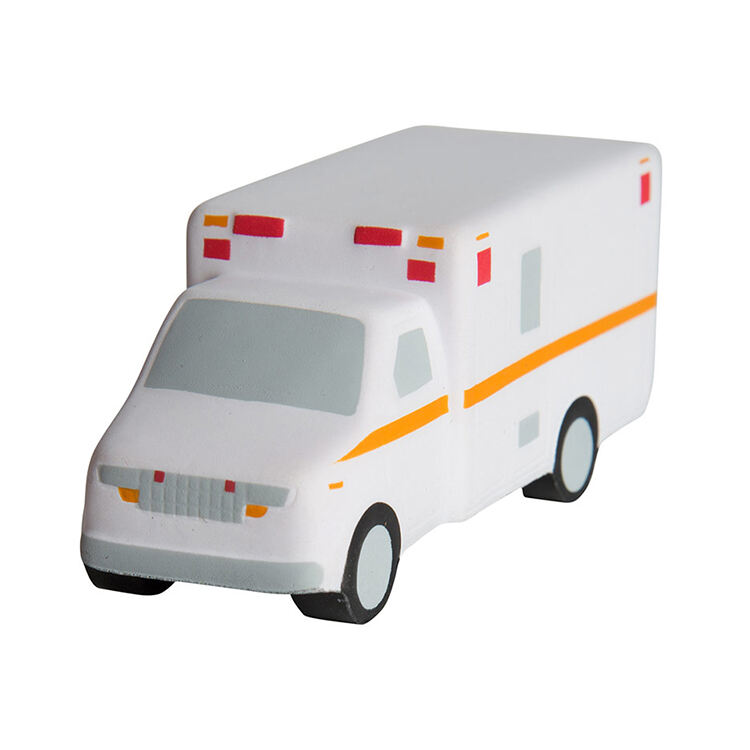
Novelty designs, such as a stress ball shaped like a car or emergency vehicle, add personality and context to the tool. These designs are particularly well-suited for car environments because the thematic connection between the object and the setting reinforces the association between squeezing and car-related stress relief.
Why Car-Shaped Designs Have Added Value
A stress ball designed to look like a car or an ambulance brings an element of humor and play into what might otherwise feel like an anxious or boring environment. The visual novelty catches the eye, invites curiosity, and encourages more frequent use because it does not feel like a clinical or medical device. Instead, it feels like a fun accessory that belongs in the car.
For children on long trips, a car-shaped stress ball doubles as a toy and a calming tool, reducing restlessness and preventing the kind of boredom that leads to cabin conflict. For adults, the playful design serves as a gentle psychological cue to adopt a lighter perspective on traffic stress or journey frustration.
When choosing a stress ball for regular car use, the design should feel like something you actually want to pick up and use, not something you tolerate because it is supposed to be good for you. The more naturally it integrates into your car environment, the more consistently you will reach for it when tension begins to build.
FAQ
Can a stress ball actually reduce road rage or driving frustration?
Yes, a stress ball can meaningfully reduce road rage by providing a physical outlet for frustration. When tension spikes due to traffic, a near-miss, or an aggressive driver, squeezing the stress ball channels that emotional energy into a controlled physical action. Over time, this can help condition a calmer response to driving stressors, though it works best as part of a broader approach to stress management on the road.
Is it safe to use a stress ball while driving?
Using a stress ball while actively driving is not recommended, as it can be a form of distraction. The safest approach is to use a stress ball only when the vehicle is stationary, such as at traffic lights or during rest stops. Passengers, however, can use a stress ball freely throughout the journey without any safety concerns.
How long should I squeeze a stress ball to feel the benefits?
Even short sessions of two to five minutes can produce a noticeable reduction in hand and forearm tension. For deeper relaxation, combining stress ball use with rhythmic breathing over ten to fifteen minutes is more effective. The key is consistency — using the stress ball regularly during journeys builds a conditioned relaxation response over time.
What type of stress ball is best for long car journeys?
For car journeys, a compact, lightweight foam or rubber stress ball that fits comfortably in one hand is ideal. Novelty designs like car-shaped stress balls are especially well-suited because they are visually engaging and contextually relevant to the driving environment. The best choice is one that you find satisfying to squeeze and enjoy having nearby during the drive.