
 EN
EN




Anyone who has spent time behind the wheel during rush hour knows that driving in heavy traffic is rarely a neutral experience. The combination of stop-and-go movement, unpredictable behavior from other drivers, tight schedules, and environmental noise creates a uniquely pressurized situation that places significant psychological and physical demands on the person at the wheel. In this context, stress relievers have earned their place as practical tools, not novelty items, helping drivers manage the mental load that accumulates during prolonged exposure to congestion.
Understanding why stress relievers are genuinely useful for drivers requires looking at how high-traffic conditions affect the body and mind, and how simple tactile or sensory interventions can interrupt those patterns before they escalate into road rage, fatigue-related errors, or long-term burnout. The science behind these tools is more grounded than most people realize, and their practical value becomes even clearer when examined through the lens of everyday commuting and professional driving demands.
The Psychological Impact of High-Traffic Driving
How Congestion Triggers the Stress Response
When a driver enters dense traffic, the brain interprets the environment as a series of low-level threats. The unpredictability of surrounding vehicles, the pressure of maintaining safe following distances, and the frustration of moving slower than intended all activate the body's stress response system. Cortisol and adrenaline begin to rise, heart rate increases slightly, and muscle tension builds in the neck, shoulders, and hands.
This response is not dramatic in the way that a sudden emergency would be, but it is persistent. Extended exposure to this low-grade activation is what makes commuter stress particularly wearing. Unlike a single acute stressor that resolves quickly, traffic congestion prolongs the arousal state across minutes or hours, leaving drivers physically and mentally drained well before they reach their destination.
Stress relievers serve as a counterbalance to this process. By giving the nervous system a constructive outlet, they help redirect the body's tension into a neutral or calming channel rather than allowing it to accumulate unchecked. Even a simple squeeze-based stress reliever activates tactile feedback pathways that can interrupt the stress loop and bring the driver's physiological state back toward baseline.
The Emotional Cost of Repeated Traffic Exposure
Beyond the immediate physiological reaction, drivers who commute regularly through high-traffic conditions face a cumulative emotional toll. Repeated experiences of frustration, helplessness, and time loss can gradually shape a driver's baseline mood, making them more reactive and less patient not only on the road but in other areas of life as well.
Research in occupational health consistently shows that commute stress is one of the most underestimated contributors to workplace fatigue and interpersonal friction. For professional drivers, including delivery personnel, rideshare operators, and truck drivers, this emotional erosion is even more significant because they cannot easily separate their working environment from the source of stress.
This is precisely where stress relievers offer a meaningful intervention. They provide a small but reliable moment of agency in an environment where the driver has very little control. The act of engaging with a tactile object, even briefly, signals to the brain that there is something within the driver's control, and that micro-shift in perception can be enough to prevent emotional escalation.
How Stress Relievers Work in a Driving Context
The Role of Tactile Engagement in Reducing Tension
Stress relievers, particularly handheld squeeze toys shaped to fit comfortably in the palm, work through a mechanism rooted in sensorimotor engagement. When a person squeezes a soft, pliable object, the muscles of the hand and forearm contract and release in a rhythmic pattern. This repetitive motion helps discharge muscular tension that has built up in response to stress, functioning similarly to the way that physical movement can release cortisol during exercise.
The tactile feedback also draws attention away from frustrating stimuli. When a driver's focus partially shifts to the sensation in their hand, the cognitive bandwidth dedicated to ruminating over traffic, late arrivals, or the behavior of other drivers is reduced. This is not distraction in the dangerous sense, as the driver remains visually focused on the road, but rather a redistribution of mental energy that prevents stress from monopolizing the driver's inner experience.
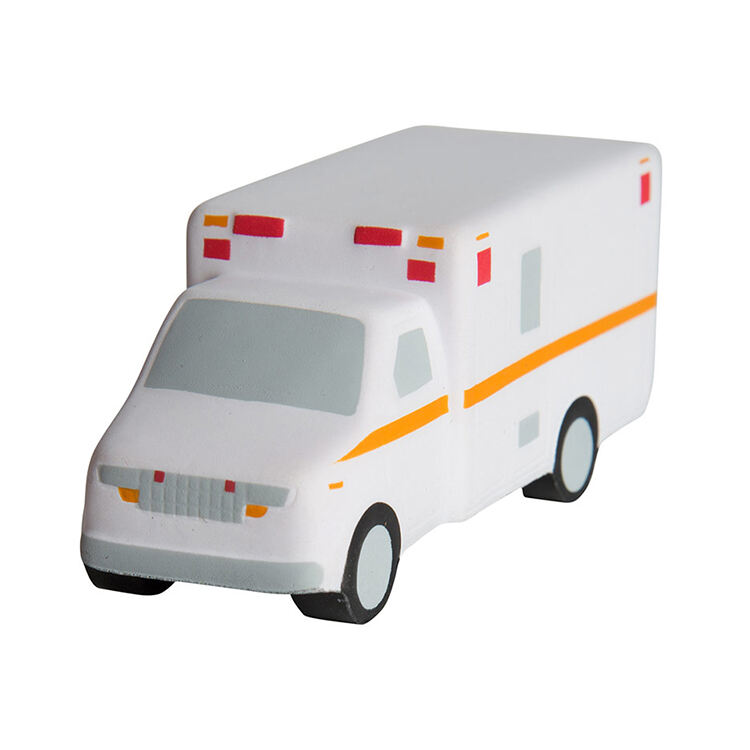
Car-shaped stress relievers in particular carry an added layer of contextual familiarity. A driver holding a miniature vehicle or emergency car toy is engaging with an object that fits naturally into the driving environment, which reduces any psychological friction associated with using the tool and makes it easier to reach for during moments of peak frustration.
Breathing, Focus, and the Calming Mechanism
Effective use of stress relievers tends to naturally synchronize with slower, more deliberate breathing. When a driver squeezes a stress reliever on the exhale and releases on the inhale, they inadvertently practice a simplified version of controlled breathing, which is one of the most evidence-backed methods for reducing acute anxiety. This synchronization does not need to be intentional to be beneficial; the physical rhythm of engagement encourages a calmer respiratory pattern on its own.
Slower breathing directly counteracts the physiological stress response. It signals the parasympathetic nervous system, often called the 'rest and digest' system, to become more active. Heart rate decreases, blood pressure drops slightly, and the driver regains a greater sense of composure. In high-traffic conditions where moments of frustration arrive frequently, having a readily accessible tool that supports this process is genuinely practical.
Stress relievers also help with what is sometimes described as 'tunnel anger,' the narrowing of attention that occurs when frustration peaks and a driver becomes fixated on a single perceived injustice on the road. The tactile interruption provided by a squeeze toy broadens attentional focus, which is not only calming but also safer from a driving performance perspective.
Practical Reasons Drivers Benefit From Stress Relievers
Accessibility and Ease of Use While Driving
One of the most compelling reasons stress relievers are useful for drivers specifically is their design compatibility with the driving environment. Unlike other stress management approaches that require the user to close their eyes, leave the situation, or engage in extended practice, a stress reliever can be picked up and used with one hand, in under a second, without diverting visual attention from the road.
This immediacy matters enormously in traffic. When a driver feels a surge of anger or frustration, the window for a healthy intervention is short. An accessible physical object within reach, whether stored in the cupholder, door pocket, or center console, provides a reliable on-ramp to de-escalation before the emotional response has time to solidify into reactive behavior.
For professional drivers who spend long hours in the cab, having stress relievers as a consistent feature of the driving environment normalizes the practice of proactive stress management. Over time, reaching for a stress reliever becomes a conditioned response to rising tension, functioning almost automatically as a coping behavior that has been built into the driver's routine.
Long-Term Wellbeing Benefits for Regular Commuters
The cumulative benefit of regular use is worth examining. Drivers who consistently use stress relievers as part of their driving routine tend to report lower overall stress levels associated with their commute over time. This is partly because the tool provides relief in the moment, but also because the habit of engaging with a calming object builds a general association between driving and manageable stress rather than dread or resentment.
This shift in association has measurable effects on quality of life. When driving no longer feels like an inherently stressful obligation, the downstream effects include better mood upon arrival at work or home, reduced irritability, improved sleep quality in frequent commuters, and greater overall resilience to workplace or personal pressures that might otherwise feel amplified by an already depleted emotional state.
Stress relievers are also low-cost and low-maintenance, which removes barriers to adoption. There is no subscription, no learning curve, and no equipment setup. For organizations that manage fleets of drivers, providing stress relievers as part of a driver wellness package is a simple, cost-effective step toward reducing burnout and improving retention among employees who spend most of their working hours in high-traffic environments.
Why Car-Shaped Stress Relievers Resonate With Drivers
The Appeal of Contextually Relevant Design
Not all stress relievers are equally effective for all users, and context plays a significant role in how well a stress management tool performs. Car-shaped stress relievers, including those modeled after emergency vehicles like ambulances, have a particular resonance with drivers because the object itself is thematically connected to the user's environment. This contextual alignment reduces cognitive dissonance and makes the tool feel appropriate rather than out of place.
For drivers, there is also a subtle motivational element at work. Holding a miniature version of a vehicle while navigating traffic creates a mild sense of mastery or control that complements the psychological function of the stress reliever itself. The driver's subconscious connects the object in hand with the activity they are performing, reinforcing a sense of competence and composure rather than helplessness.
From a workplace gifting and fleet management perspective, car-shaped stress relievers make intuitive sense as tools distributed to drivers. They communicate an understanding of the driver's specific experience and signal that their wellbeing in that particular context has been considered. This kind of targeted provision is more meaningful to recipients than generic wellness items that feel disconnected from their daily realities.
Functional Value Beyond Individual Use
Stress relievers shaped like vehicles, particularly recognizable forms like emergency cars or delivery vans, also carry value in organizational settings where driver culture and team identity matter. When a fleet operator or logistics company provides drivers with contextually relevant stress relievers, it reinforces a shared identity and demonstrates investment in driver experience at a practical level.
This matters in industries where driver turnover is high and job satisfaction is directly tied to how supported drivers feel in their roles. A small, thoughtful tool that addresses a very real daily pain point can be part of a broader message about organizational culture. Stress relievers in this context become more than desk toys; they are tangible signals of acknowledgment.
The novelty factor of a well-designed car-shaped stress reliever also ensures that drivers actually use the tool rather than setting it aside. Memorable, visually distinctive designs encourage habitual engagement, which is ultimately what determines whether the stress management benefit is realized consistently or only occasionally.
FAQ
Are stress relievers safe to use while driving?
Yes, stress relievers are designed for single-hand use and do not require visual attention, making them compatible with driving when used thoughtfully. A driver should only use a stress reliever during periods of reduced demand, such as when stationary in traffic or during long stretches of slow-moving congestion, and should always prioritize full control of the vehicle. The goal is tension relief, not distraction.
How often should drivers use stress relievers to see a benefit?
Consistent, habitual use tends to produce the most meaningful results. Drivers who reach for stress relievers at early signs of frustration, before tension peaks, typically find the tool more effective than those who use it only after stress has fully escalated. Even brief engagement of thirty to sixty seconds can interrupt the physiological stress response and support a return to a calmer baseline.
Can stress relievers help with road rage specifically?
Stress relievers address the early-stage tension that, if left unmanaged, can develop into road rage. By providing a physical outlet for frustration and helping redirect cognitive focus, they reduce the likelihood that irritation will escalate into aggressive driving behavior. They are most effective as a preventive tool rather than a solution for severe anger, which may require additional support.
What makes a stress reliever well-suited for a driving environment?
The best stress relievers for drivers are compact enough to fit in one hand, soft enough to provide satisfying tactile resistance without requiring significant force, and durable enough to withstand repeated daily use. Car-shaped or vehicle-themed designs offer the added advantage of contextual familiarity. Storage accessibility, whether the object can be kept within easy reach in a cupholder or door pocket, is also an important practical consideration.